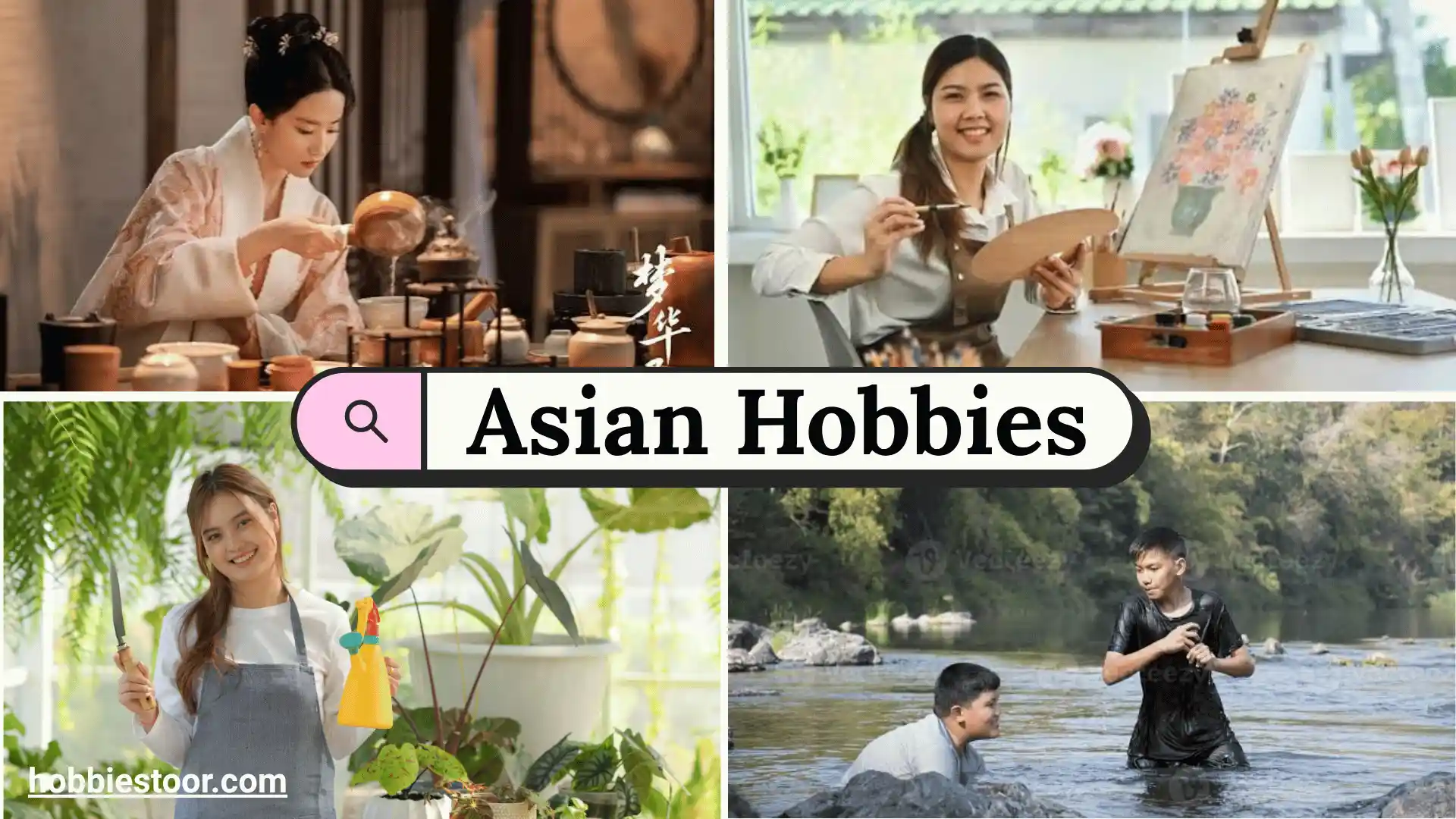
Asian hobbies cover a wide range of creative, cultural, relaxing, and skill based activities. From Japanese calligraphy and traditional crafts to Chinese cultural activities and Korean pastimes, there are many ways to explore these interests without needing advanced skills.
Some hobbies are closely connected to history and tradition, while others are modern activities enjoyed by people of all ages. This makes Asian hobbies useful for anyone looking for something creative, educational, calming, or simply different from common everyday hobbies.
In this guide, you will find a broad Asian hobbies list, along with traditional Japanese hobbies, ancient Chinese hobbies, Korean hobbies, student-friendly activities, and ideas often discussed in online communities. The goal is to help you understand these hobbies and find options that genuinely interest you.
Asian Hobbies
Asian hobbies include activities from many different countries and cultures, so there is no single definition of an “Asian hobby.” Japan, China, Korea, India, Vietnam, Thailand, and many other parts of Asia have their own traditional and modern pastimes.
Some popular categories include:
- Calligraphy and handwriting arts
- Tea-related traditions
- Traditional crafts
- Painting and drawing
- Gardening
- Martial arts
- Cooking and food preparation
- Origami and paper crafts
- Board and strategy games
- Traditional music
- Dance
- Collecting cultural items
- Meditation and quiet creative activities
A good way to choose an Asian hobby is to think about what you enjoy already. Someone who likes drawing might enjoy Chinese calligraphy or Japanese ink painting, while someone interested in hands on crafts might prefer origami, pottery, weaving, or traditional paper arts.
Japanese Hobbies List
Japanese hobbies range from simple activities that can be practiced at home to traditional arts that require years of study. Many are centered around patience, craftsmanship, creativity, or appreciation of everyday details.
Here is a useful Japanese hobbies list:
- Origami
- Japanese calligraphy
- Tea ceremony
- Ikebana flower arranging
- Bonsai
- Go
- Shogi
- Manga drawing
- Anime-related collecting
- Kintsugi-inspired craftwork
- Traditional pottery
- Japanese cooking
- Gardening
- Photography
- Embroidery
- Woodworking
- Fishing
- Hiking
- Karaoke
Not every Japanese hobby has to be traditional. Modern Japanese hobbies can include gaming, collecting figures, reading manga, creating cosplay, photography, and learning Japanese.
For beginners, simple options such as origami, drawing, cooking, or basic calligraphy are easy places to start. More structured arts, such as tea ceremony or ikebana, may be better learned through classes or guided instruction.
Traditional Japanese Hobbies

Traditional Japanese hobbies often reflect careful craftsmanship, patience, nature, and cultural customs. Many have developed over long periods and continue to be practiced today.
Bonsai
Bonsai involves cultivating and shaping miniature trees in containers. It requires regular care, observation, and patience. Beginners can start with a relatively easy to-care-for plant before learning more advanced shaping techniques.
Ikebana
Ikebana is the Japanese art of arranging flowers and other plant materials. Unlike simply placing flowers in a vase, it focuses on composition, balance, space, and the relationship between natural elements.
Tea Ceremony
The Japanese tea ceremony is a highly structured cultural practice involving the preparation and serving of tea. It can be interesting for people who enjoy ritual, history, hospitality, and quiet attention to detail.
Japanese Calligraphy
Japanese calligraphy uses brush, ink, and paper to create written characters with deliberate strokes. Beginners can start with basic brush control before practicing individual characters and more complex compositions.
Origami
Origami turns paper into animals, flowers, objects, and decorative shapes through folding. It is inexpensive, portable, and suitable for beginners while still offering challenging designs for experienced folders.
Unique Japanese Hobbies
Some Japanese hobbies stand out because they combine creativity with unusual techniques, cultural traditions, or highly specialized skills.
Kintsugi-inspired craftwork is one example. It is associated with repairing broken pottery in a way that makes the repair part of the object’s visible character. For hobbyists, the appeal is partly in transforming an ordinary damaged object into something decorative.
Other interesting choices include:
- Miniature food making
- Traditional doll collecting
- Japanese pottery
- Bonsai shaping
- Furoshiki wrapping
- Japanese paper crafts
- Sword-related historical studies without weapon use
- Sumi-e ink painting
- Haiku writing
- Traditional textile crafts
- Goshuin collecting during temple and shrine visits
- Japanese garden design
When choosing a unique hobby, consider how much equipment and instruction it requires. Some activities can begin with inexpensive supplies at home, while others are easier and safer when learned from an experienced teacher.
Asian Hobbies Reddit
Online communities can be useful when you want to see how real hobbyists practice Asian related hobbies, what beginners struggle with, and which supplies they commonly use. Reddit discussions, in particular, can provide personal experiences and project ideas.
However, online discussions should be treated as personal advice rather than universal rules. A hobbyist’s preferred material, technique, or learning method may work well for them without being the only correct approach.
When exploring discussions about Asian hobbies, look for conversations focused on:
- Beginner experiences
- Recommended learning methods
- Practice routines
- Affordable supplies
- Traditional techniques
- Common mistakes
- Hobby projects
- Cultural background
- Ways to practice at home
It is also helpful to distinguish cultural information from personal opinions. Traditional arts can have specific techniques and historical contexts, so learning from knowledgeable practitioners can give you a better understanding than relying on a single online comment.
Ancient Chinese Hobbies
Ancient Chinese society developed many activities connected with art, education, nature, strategy, music, and personal cultivation. Some of these traditions influenced hobbies that remain recognizable today.
Calligraphy
Chinese calligraphy has a long cultural history and became an important form of artistic expression. Practicing characters with brush and ink requires control, repetition, and attention to form.
Painting
Traditional Chinese painting commonly focused on subjects such as landscapes, plants, animals, and other scenes from nature. Beginners can study basic brush techniques before attempting more detailed compositions.
Go
Go is an ancient strategy board game that developed in China. Players place stones on a board while attempting to control territory. It is easy to learn at a basic level but offers considerable strategic depth.
Traditional Music
Chinese musical traditions include instruments such as the guqin, guzheng, erhu, and pipa. Learning one of these instruments can provide both a creative hobby and an introduction to traditional music.
Poetry
Poetry was an important part of traditional Chinese literary culture. Writing or studying classical-style poetry can be an enjoyable hobby for people interested in language, history, and creative expression.
Chinese Activities for Students

Chinese cultural activities can be adapted for students through simple projects that combine creativity and learning. They do not have to require expensive materials or advanced skills.
Good choices include:
- Practicing basic Chinese calligraphy
- Learning simple paper-cutting techniques
- Making paper lanterns
- Studying traditional Chinese painting
- Learning basic Chinese characters
- Playing beginner-level Go
- Exploring Chinese folk stories
- Learning about traditional festivals
- Trying Chinese cooking with adult supervision when needed
- Creating Chinese-inspired art projects
- Practicing traditional brush techniques
For younger students, short activities are usually easier to manage than projects requiring long periods of concentration. Older students can explore more detailed calligraphy, language practice, research projects, or traditional games.
The best activities are those that give students something practical to make, practice, or demonstrate. This makes the hobby more engaging while also providing a way to learn about Chinese culture.
Chinese Calligraphy

Chinese calligraphy is both a writing practice and a visual art. Traditional practice commonly uses a brush and ink, although beginners can first practice with simpler tools to become comfortable with character shapes and stroke order.
A beginner can start with a small set of basic characters rather than trying to learn dozens at once. Focus on holding the brush comfortably, controlling pressure, and following the correct stroke sequence.
What Beginners Need
Basic supplies may include:
- Calligraphy brush
- Ink
- Inkstone or suitable ink container
- Paper
- A practice surface
- Water or a cleaning container
Good practice is more important than buying a large collection of supplies. Start slowly and repeat simple strokes until the movements become more natural.
Chinese calligraphy can also be a relaxing creative hobby because it encourages focused practice. At the same time, beginners should understand that traditional calligraphy is a skilled art, and developing polished technique takes consistent practice.
Korean Hobbies
Korean hobbies include both traditional activities and modern interests. Some are connected to food, crafts, games, music, and cultural traditions, while others are common recreational activities enjoyed throughout modern Korean society.
Possible Korean-inspired hobbies include:
- Korean cooking
- Korean calligraphy
- Traditional paper crafts
- Hanji crafts
- Traditional board games
- Korean embroidery
- Drawing and illustration
- K-pop dance practice
- Learning Korean
- Korean poetry and literature
- Photography
- Hiking
- Gardening
- Collecting cultural items
- Traditional music
Korean paper crafts using hanji can be especially interesting for people who enjoy hands on projects. Cooking is another accessible option because you can begin with a small number of familiar dishes and gradually expand your skills.
Modern Korean hobbies can also be explored through music, dance, language learning, fashion, entertainment, and creative communities. Choose an activity based on your genuine interest rather than assuming that one hobby represents everyone in Korea.
Stereotypical Asian Hobbies
The phrase “stereotypical Asian hobbies” is often used online to describe activities that people associate with Asian families or cultures, such as academic study, musical training, martial arts, calligraphy, or strategy games.
However, stereotypes can oversimplify large and diverse populations. Asia contains many countries, languages, cultures, communities, and individual lifestyles. A hobby may be popular in one family or community without representing an entire region.
Instead of treating stereotypes as facts, it is more useful to look at the actual activity behind the label. For example, learning piano is a real skill-building hobby, studying calligraphy is a creative practice, and playing Go is a strategy game. Each can be enjoyed by people from any background.
This distinction matters when exploring cultural hobbies. You can appreciate an activity for its history, craftsmanship, or entertainment value without assuming that everyone from a particular culture enjoys it.
FAQ
What Are Some Popular Asian Hobbies?
Popular Asian hobbies include calligraphy, cooking, gardening, martial arts, traditional crafts, strategy games, drawing, music, and paper arts. The exact hobbies vary widely between countries and communities.
What Is a Good Japanese Hobby for Beginners?
Origami, basic Japanese calligraphy, cooking, drawing, and simple gardening are approachable choices. They can be started with relatively simple materials and allow beginners to develop skills gradually.
Is Chinese Calligraphy Difficult to Learn?
Chinese calligraphy has a learning curve because brush control, character structure, and technique require practice. Beginners can make progress by starting with basic strokes and a small number of characters.
What Are Some Chinese Activities for Students?
Students can try calligraphy, paper crafts, traditional painting, beginner Go, Chinese language activities, folk-art projects, and cultural research. Activities can be adjusted for different ages and skill levels.
Are Asian Hobbies Only for People From Asia?
No. Cultural hobbies can be explored by people from any background. The important part is to learn about the activity respectfully, understand its cultural context, and avoid presenting stereotypes as facts.
Conclusion
Asian hobbies offer a wide variety of ways to explore creativity, culture, strategy, craftsmanship, and relaxation. Japanese traditions such as bonsai, ikebana, origami, and calligraphy provide different experiences, while Chinese calligraphy, Go, painting, and traditional arts offer their own rich areas to explore.
Students and beginners can start with simple activities that require little equipment, while experienced hobbyists can move toward more specialized practices. Korean hobbies also provide plenty of choices, from cooking and crafts to language, music, and modern creative interests.
The best hobby is ultimately the one that matches your interests, available time, and willingness to practice. Exploring these activities with curiosity and respect can make the experience more rewarding while giving you a deeper appreciation of the cultures behind them.