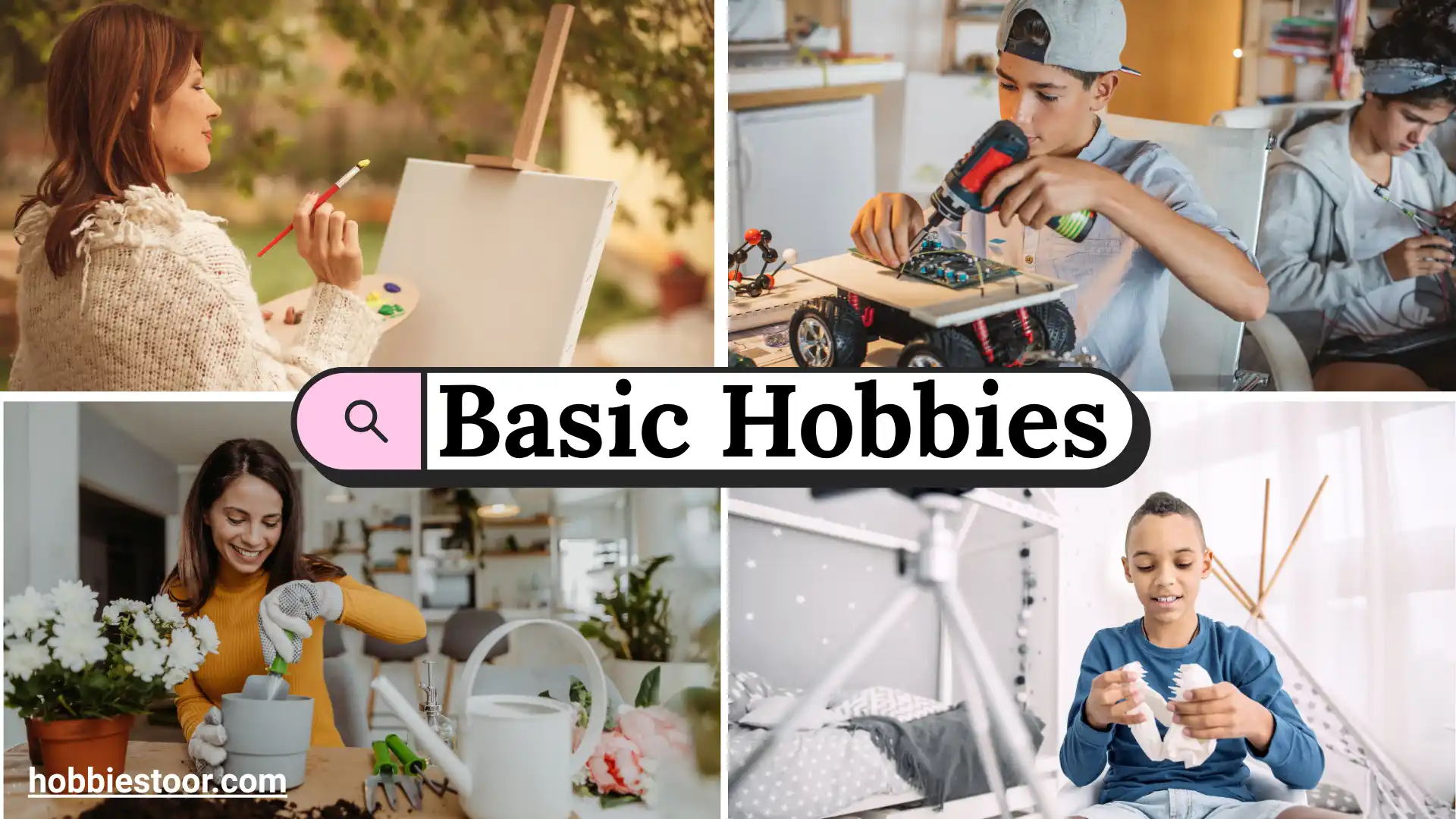
Finding a hobby does not have to be complicated or expensive. Basic hobbies can give you something enjoyable to do in your free time, help you explore your interests, and make everyday life more interesting. From reading and drawing to cooking and walking, there are many simple activities that can fit different personalities and schedules.
Some people want hobbies that are easy to start, while others are looking for activities they can mention on a resume or develop into long-term interests. Students may need hobbies that fit around classes, while adults may prefer relaxing activities after work. Girls, women, and men can all choose from the same wide range of hobbies based on personal interests rather than strict categories.
This guide brings together basic hobby ideas, a large list of 100 hobbies, A Z suggestions, options for different age groups, and ideas that go beyond traditional hobbies. You can use the lists to discover something new or narrow your choices based on your time, budget, and goals.
Basic Hobbies
Basic hobbies are simple activities that most beginners can start without extensive training or specialized equipment. They can be relaxing, creative, active, social, educational, or practical.
Some popular basic hobbies include:
- Reading books
- Walking
- Drawing
- Writing
- Cooking
- Baking
- Gardening
- Photography
- Listening to music
- Playing an instrument
- Watching movies
- Journaling
- Puzzles
- Coloring
- Swimming
- Cycling
- Hiking
- Learning languages
- Crafts
- Meditation
The best basic hobby is one that you genuinely enjoy. You do not need to be highly skilled at the beginning. A hobby becomes more rewarding as you become comfortable with it and discover what you like about it.
What Are Basic Hobbies
Basic hobbies are everyday recreational activities that can be enjoyed during free time. They generally have a low barrier to entry, making them suitable for people who are new to hobbies.
For example, someone who wants a quiet hobby might start reading, journaling, sketching, or doing puzzles. Someone who prefers movement might try walking, cycling, swimming, or simple home workouts.
A basic hobby can also become more advanced over time. Photography may develop into portrait or landscape photography, while cooking can grow into experimenting with different cuisines and techniques.
Creative Hobbies
- Drawing
- Painting
- Writing
- Photography
- Origami
- Knitting
- Crocheting
- Scrapbooking
Relaxing Hobbies
- Reading
- Journaling
- Coloring
- Gardening
- Listening to music
- Puzzles
- Watching films
- Collecting
Active Hobbies
- Walking
- Cycling
- Swimming
- Hiking
- Dancing
- Yoga
- Badminton
- Recreational sports
Learning Hobbies
- Learning a language
- Playing an instrument
- Cooking
- Baking
- Astronomy
- History
- Coding
- Creative writing
Starting with something familiar can make it easier to turn a casual activity into a regular hobby.
Basic Hobbies List
A basic hobbies list can help you compare different types of activities before deciding what to try. Consider these options:
- Reading
- Writing
- Drawing
- Painting
- Cooking
- Baking
- Gardening
- Walking
- Hiking
- Cycling
- Swimming
- Dancing
- Singing
- Photography
- Birdwatching
- Fishing
- Puzzles
- Board games
- Journaling
- Calligraphy
- Crafts
- Sewing
- Knitting
- Crochet
- Collecting
- Volunteering
- Learning languages
- Playing chess
- Playing an instrument
- Watching documentaries
When choosing from a list like this, think about whether you prefer creating, learning, moving, collecting, relaxing, or spending time with other people.
Basic Hobbies and Interests
Hobbies and interests often overlap, but they are not exactly the same. An interest is something you enjoy learning about or thinking about, while a hobby usually involves actively spending time doing something.
For example, someone interested in photography might enjoy looking at photographs, while photography becomes a hobby when they regularly take and edit pictures.
Common interests can lead to hobbies such as:
- Interest in nature → Gardening or birdwatching
- Interest in food → Cooking or baking
- Interest in stories → Reading or creative writing
- Interest in art → Drawing or painting
- Interest in technology → Coding or electronics
- Interest in fitness → Walking, cycling, or swimming
- Interest in history → Reading historical books or visiting museums
- Interest in music → Singing or learning an instrument
Your interests can therefore be useful clues when you are unsure which hobby to choose.
Basic Hobbies of a Person
A person’s hobbies often reflect their personality, available time, environment, and interests. One person may enjoy several completely different activities.
For example, a person might spend weekends gardening, read before bed, and occasionally go hiking. Another person might prefer gaming, cooking, and photography.
A balanced personal hobby collection can include:
- One relaxing hobby
- One creative hobby
- One active hobby
- One learning-based hobby
- One social hobby
There is no requirement to have a certain number of hobbies. One enjoyable activity can be enough.
100 Hobbies
If you want a large selection of ideas, these 100 hobbies cover creative, active, practical, social, relaxing, and educational interests.
- Reading
- Journaling
- Creative writing
- Poetry
- Drawing
- Painting
- Sketching
- Photography
- Filmmaking
- Calligraphy
- Coloring
- Scrapbooking
- Origami
- Knitting
- Crocheting
- Sewing
- Embroidery
- Quilting
- Woodworking
- Pottery
- Cooking
- Baking
- Cake decorating
- Gardening
- Indoor gardening
- Birdwatching
- Hiking
- Walking
- Cycling
- Swimming
- Dancing
- Yoga
- Running
- Badminton
- Tennis
- Basketball
- Soccer
- Fishing
- Camping
- Geocaching
- Playing chess
- Playing checkers
- Board games
- Card games
- Puzzles
- Crossword puzzles
- Sudoku
- Collecting coins
- Collecting stamps
- Collecting books
- Collecting postcards
- Learning languages
- Learning history
- Astronomy
- Coding
- Electronics
- Playing guitar
- Playing piano
- Singing
- Music production
- Podcasting
- Film appreciation
- Museum visits
- Volunteering
- Travel planning
- Interior decorating
- Home organization
- DIY projects
- Model building
- Miniature making
- LEGO building
- Calligraphy practice
- Candle making
- Soap making
- Beadwork
- Jewelry making
- Leathercraft
- Knitting
- Rock painting
- Flower arranging
- Bonsai
- Terrarium making
- Aquarium keeping
- Meditation
- Breathwork
- Bird photography
- Nature walks
- Stargazing
- Cooking new cuisines
- Recipe collecting
- Tea tasting
- Coffee brewing
- Thrifting
- Upcycling
- Furniture restoration
- Sewing clothes
- Digital art
- Graphic design
- Video editing
- Blogging
- Genealogy
You do not need to try all 100. Pick two or three that match your interests and see which one you naturally want to continue.
Hobbies List A-Z
An A-Z hobbies list makes it easier to discover ideas you might not have considered.
- A: Astronomy, Art, Archery
- B: Baking, Birdwatching, Blogging
- C: Cooking, Cycling, Calligraphy
- D: Drawing, Dancing, DIY
- E: Embroidery, Electronics, Exercise
- F: Fishing, Filmmaking, Flower arranging
- G: Gardening, Geocaching, Gaming
- H: Hiking, Home decorating, History
- I: Indoor gardening, Illustration, Instrument playing
- J: Journaling, Jewelry making
- K: Knitting, Kite flying
- L: Learning languages, Leathercraft, LEGO building
- M: Meditation, Model building, Music
- N: Nature walks, Needlework
- O: Origami, Online learning
- P: Photography, Painting, Puzzles
- Q: Quilting, Quiz games
- R: Reading, Running, Rock painting
- S: Sewing, Swimming, Scrapbooking
- T: Tennis, Travel planning, Terrarium making
- U: Upcycling, Urban gardening
- V: Volunteering, Video editing
- W: Writing, Woodworking, Walking
- X: Xylophone playing
- Y: Yoga, Yarn crafts
- Z: Zentangle-style drawing, Zoo visits
This list can also be useful when you want to explore hobbies outside your usual interests.
What Are the 10 Best Hobbies
There is no single list of hobbies that is best for everyone. The most suitable choice depends on what you want from your free time.
Ten broadly accessible options include:
- Reading for people who enjoy stories and learning
- Walking for people who like simple outdoor activity
- Drawing for creative beginners
- Cooking for practical and creative enjoyment
- Gardening for people who enjoy plants
- Photography for visual creativity
- Writing for people who enjoy expressing ideas
- Cycling for outdoor recreation
- Puzzles for quiet mental entertainment
- Learning an instrument for people interested in music
Instead of choosing a hobby because it is popular, consider how easily it fits into your routine. A simple hobby you regularly enjoy can be more useful to you than an activity that looks interesting but never fits your schedule.
Top 10 Hobbies for Females
Women can enjoy any hobby, and personal interests should be the main factor when choosing one. Still, some activities are commonly explored by women because they offer creative, social, practical, or relaxing experiences.
Ten ideas include:
- Reading
- Gardening
- Baking
- Photography
- Painting
- Yoga
- Sewing
- Journaling
- Dancing
- Learning a language
These are not limited to women. They are simply examples that may appeal to people looking for creative, relaxing, active, or skill-building activities.
Basic Hobbies for Girls
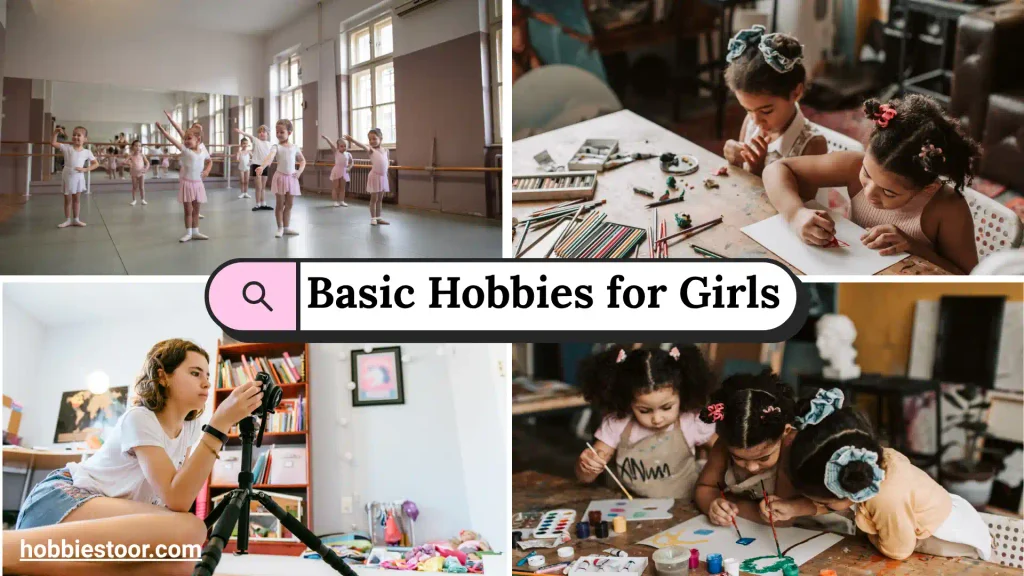
Girls can explore hobbies at many different ages, from simple crafts to sports and creative activities. The best choice depends on personality and interests.
Good beginner-friendly ideas include:
- Drawing and coloring
- Reading
- Dancing
- Swimming
- Baking with adult supervision when appropriate
- Gardening
- Photography
- Crafts
- Puzzles
- Singing
- Playing an instrument
- Writing stories
- Board games
- Cycling
- Collecting interesting objects
For younger girls, adults should consider age-appropriate equipment, supervision, and safety. The goal should be enjoyment and exploration rather than pressure to become highly skilled.
Hobbies List For Girl
A broader hobbies list for girls can include both traditional and modern activities.
- Art and painting
- Drawing
- Reading
- Creative writing
- Dancing
- Singing
- Swimming
- Cycling
- Photography
- Baking
- Cooking
- Gardening
- Crafts
- Jewelry making
- Sewing
- Knitting
- Puzzles
- Chess
- Board games
- Music
- Theater
- Volunteering
- Language learning
- Nature walks
- Collecting
- Digital art
- Video editing
- Coding
- Blogging
- Photography projects
A girl who enjoys several categories can combine them. For example, someone interested in art and technology could explore digital illustration.
Basic Hobbies for Students

Students often need hobbies that can fit around classes, homework, exams, and other responsibilities. Short activities are particularly convenient when free time is limited.
Useful options include:
- Reading
- Drawing
- Journaling
- Walking
- Running
- Cycling
- Photography
- Playing chess
- Learning an instrument
- Learning a language
- Coding
- Writing
- Cooking
- Baking
- Gardening
- Puzzles
- Sports
- Dancing
- Volunteering
- Crafts
A student does not need to spend hours on a hobby. Even a small amount of regular free time can be enough to enjoy an activity and develop a skill.
Basic Hobbies for Adults
Adults often have work, family, household, and social responsibilities, so hobbies that are flexible can be especially convenient.
Some options include:
- Reading
- Gardening
- Cooking
- Baking
- Photography
- Walking
- Hiking
- Cycling
- Painting
- Writing
- DIY projects
- Woodworking
- Sewing
- Playing an instrument
- Fishing
- Puzzles
- Board games
- Volunteering
- Travel planning
- Collecting
If your schedule is unpredictable, choose a hobby that can be paused and resumed easily. Reading, drawing, cooking, and gardening can all be adapted to different amounts of available time.
Basic Hobbies for Women
Women can choose hobbies based on their interests, schedules, and personal goals rather than age or gender expectations.
For relaxation, consider reading, gardening, journaling, coloring, or puzzles. For creativity, try painting, photography, sewing, crafts, or writing. If you prefer active hobbies, walking, cycling, swimming, dancing, or hiking can be options.
Some hobbies can also combine enjoyment with practical skills:
- Cooking can develop meal-preparation skills.
- Sewing can support clothing and repair projects.
- Gardening can provide experience with plants.
- Photography can develop visual and editing skills.
- Writing can improve communication and creative expression.
- Coding can provide a technical skill to explore.
The right hobby is ultimately the one that you look forward to doing.
Basic Hobbies for Men
Men can enjoy the full range of creative, active, practical, social, and relaxing hobbies. There is no fixed hobby list that applies to every man.
Popular starting points can include:
- Fishing
- Cycling
- Hiking
- Cooking
- Photography
- Woodworking
- Gardening
- Reading
- Writing
- Gaming
- Chess
- Model building
- DIY projects
- Fitness
- Camping
- Playing an instrument
- Drawing
- Collecting
- Car-related projects
- Volunteering
If you are completely new to hobbies, start with something that requires little equipment. Once you know what you enjoy, you can decide whether you want to invest more time or money into it.
For Creativity
Try drawing, painting, photography, writing, crafts, sewing, music, or digital art.
For Relaxation
Reading, gardening, journaling, puzzles, coloring, and quiet walks can work well for people who want slower activities.
For Social Time
Board games, recreational sports, volunteering, dance classes, book clubs, and group hobbies can provide opportunities to interact with others.
For Learning
Languages, cooking, coding, history, astronomy, music, and photography can all become learning-focused hobbies.
For Outdoor Time
Hiking, cycling, fishing, gardening, camping, birdwatching, and nature photography are possibilities.
Thinking about the type of experience you want can make your choice much easier.
Non Basic Hobbies
Non-basic hobbies can be more specialized, unusual, technical, or involved than common beginner activities. They may require more equipment, practice, research, or commitment.
Examples include:
- Amateur astronomy
- Model railroading
- Bonsai cultivation
- Woodworking
- Leathercraft
- Pottery
- Beekeeping
- Metalworking
- Ham radio
- Historical reenactment
- Miniature painting
- Aquascaping
- Drone photography
- Advanced sewing
- Restoration projects
- Fermentation
- Genealogy research
- Geocaching
- Rock collecting
- Electronics projects
These hobbies can be rewarding for people who enjoy learning specialized skills. However, some require training, appropriate equipment, or safety precautions. Research the activity before investing heavily in it.
Basic Hobbies for Resume
Not every hobby belongs on a resume. If you include hobbies, choose interests that are relevant to the role or that help show useful qualities without exaggerating your experience.
Depending on the job, examples can include:
- Writing
- Blogging
- Photography
- Coding
- Volunteering
- Public speaking
- Team sports
- Chess
- Language learning
- Community activities
- Creative projects
- Leadership-focused clubs
For example, photography may be relevant to a creative position, while coding projects can be useful when applying for some technology-related roles.
Keep the section brief. Your education, experience, skills, and achievements should generally receive more attention than a long hobby list.
FAQ
What Is a Good Basic Hobby for a Beginner?
Reading, walking, drawing, journaling, cooking, gardening, photography, and puzzles are simple starting points. Choose one that matches your interests and available time.
How Do I Choose a Hobby That Suits Me?
Think about what you naturally enjoy, whether you prefer quiet or active activities, and whether you want to create, learn, socialize, or relax. Try a few options before committing to one.
What Are Some Hobbies That Cost Little Money?
Reading, walking, writing, drawing, journaling, photography with a phone, nature observation, and many forms of exercise can be started with little additional spending.
Can a Hobby Be Included on a Resume?
Yes, when it adds relevant context to your application. Choose hobbies that connect naturally with the position or demonstrate useful interests, skills, or activities.
Can a Basic Hobby Become a Serious Skill?
Yes. Many hobbies begin with simple activities and become advanced skills through regular practice. Cooking, photography, writing, music, gardening, and woodworking are good examples.
Conclusion
Basic hobbies give you an easy way to explore your interests without needing to become an expert from the beginning. The choices range from quiet activities such as reading and puzzles to creative, active, social, and skill-based hobbies.
The large lists in this guide can help you compare options for girls, women, men, students, and adults. You can also use your interests, available time, budget, and personal goals to narrow the choices and find something that fits your lifestyle.
You do not need to choose the perfect hobby immediately. Start with one activity that sounds enjoyable, give it some time, and notice whether you look forward to doing it again. That simple process can lead to a hobby you enjoy for years.